
Blogs
What's New Trending


Why Walkable Communities like JVT and Al Furjan Are Gaining Investor Attention in 2026
Global real estate trends are changing.
Luxury used to mean height.
Then it meant waterfront views.
Today, increasingly, it means walkability.
Under the Dubai 2040 Urban Master Plan, the emirate aims to ensure that 80% of residents’ daily needs are accessible within a 20-minute walk or bike ride.
This vision — often called the “20-Minute City” model — is reshaping how investors evaluate property value.
And foreign buyers are starting to search for communities that already fit this pedestrian-friendly blueprint.
Two areas that frequently appear in these conversations are:
Let’s explore why this matters — and how it affects long-term property returns.
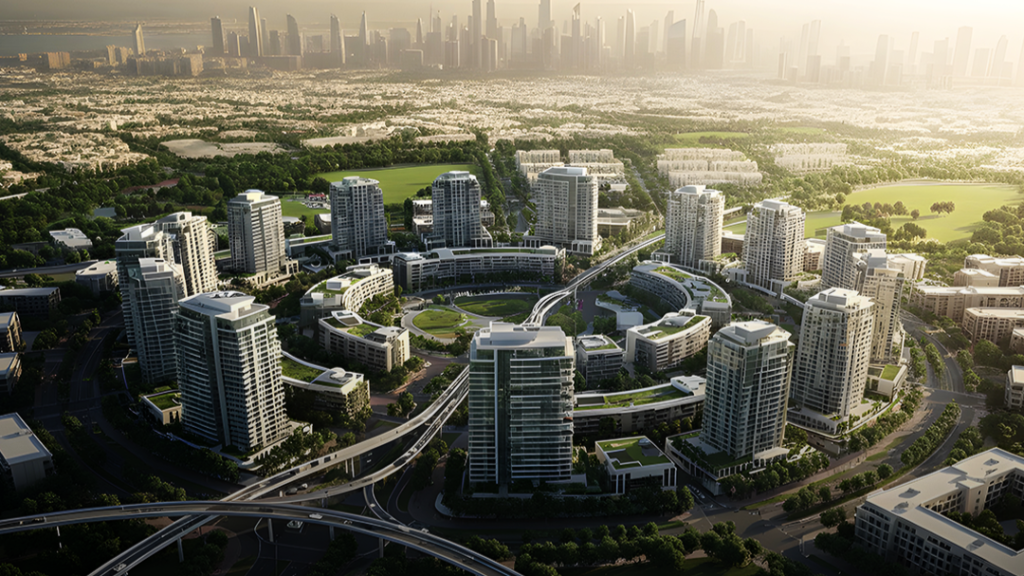
The 20-Minute City is an urban planning strategy where residents can access:
…within a 20-minute walk or cycle from their home.
The goal is to:
For investors, this is not just urban theory — it’s a value driver.
Walkability increases property value for several reasons:
1. Higher Tenant Demand
Tenants increasingly prioritize convenience and lifestyle over sheer square footage.
2. Longer Tenant Retention
Residents in walkable communities tend to renew leases more frequently.
3. Premium Perception
Properties near schools, retail, and parks command stronger resale positioning.
4. Future-Proof Urban Design
Cities globally are shifting toward mixed-use planning.
Walkable areas often outperform car-dependent zones in long-term appreciation.
Dubai’s long-term urban development strategy focuses on:
The 2040 plan is not cosmetic.
It’s a structural rebalancing of how the city grows.
This means future investment growth is likely to cluster around communities already aligned with walkability principles.
Jumeirah Village Triangle (JVT) was designed with community living in mind.
Key features include:
Many residents can already meet daily needs without driving long distances.
As Dubai moves toward its 2040 walkability goals, JVT aligns naturally with the model.
For investors, that alignment reduces future repositioning risk.
Al Furjan is another community frequently mentioned in walkability discussions.
Why?
Al Furjan benefits from both internal community design and external connectivity.
That combination strengthens its appeal among:
And where tenant demand stabilizes, rental yields become more resilient.
When residents can walk to daily amenities:
Higher foot traffic supports local businesses — which further strengthens the micro-economy of the community.
Property markets often reflect this cycle.
Convenience compounds value.
Let’s break it down:
| Factor | Walkable Community | Car-Dependent Area |
| Tenant Appeal | High | Moderate |
| Vacancy Risk | Lower | Higher |
| Lifestyle Score | Strong | Limited |
| Long-Term Demand | Stable | Cyclical |
| Alignment with 2040 Plan | Strong | Weak |
Investors increasingly factor in urban livability — not just price per square foot.
International buyers, especially from Europe, are already accustomed to:
Communities that reflect those patterns feel familiar — and therefore lower risk.
When evaluating overseas markets, foreign buyers often prioritize:
Walkability reduces uncertainty.
In some prime areas, yes.
Communities like:
…already command premiums due to density and convenience.
However, mid-market areas like JVT and Al Furjan still offer:
That combination attracts value-focused investors.
Urban transformation doesn’t happen overnight.
But as infrastructure improves and pedestrian connectivity expands:
Communities aligned early with the 20-minute concept may benefit most over the next decade.
Investors often overlook one key factor:
Happiness drives retention.
Residents who can:
…are less likely to relocate.
That stability supports:
In real estate, lifestyle translates into measurable returns.
Not every area branded as “community living” truly meets 20-minute criteria.
Smart investors should verify:
Marketing language is not enough.
Walk the map — or analyze it carefully.
Dubai’s 2040 Master Plan signals something important:
Future growth will prioritize accessibility, sustainability, and livability.
Communities like JVT and Al Furjan are already positioned within that framework.
For foreign investors, this offers:
The 20-Minute City model is not just about convenience.
It’s about creating self-sustaining neighborhoods where property value is supported by daily life — not just skyline views.
In 2026, walkability is no longer a lifestyle bonus.
It’s becoming a pricing factor.
Leave a Reply